
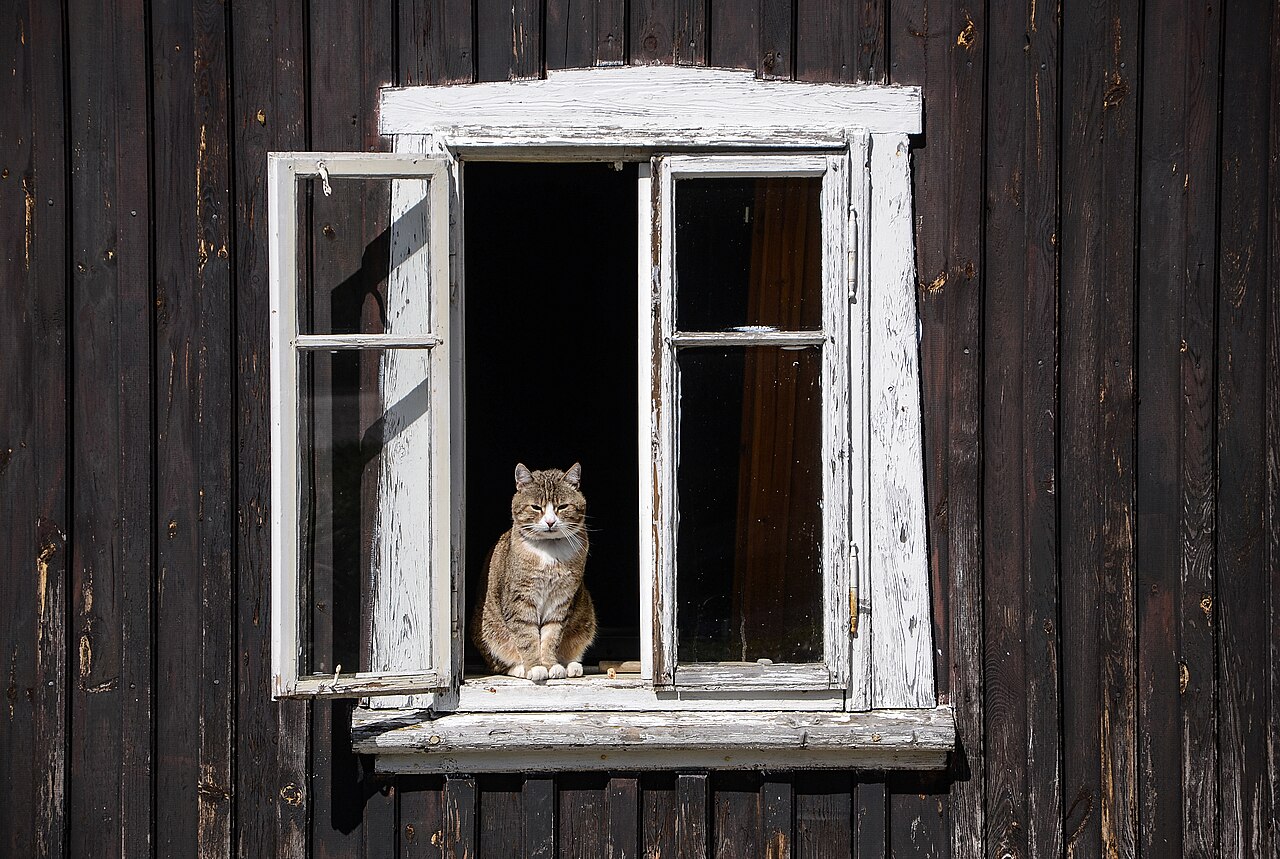
A small home can still offer varied routes, resting places, and play. The aim is not to fill every corner with equipment. Look for useful choices the cat can access comfortably and the household can maintain safely.
Reuse the space at different times
Clear a short floor route for interactive play, then store string toys afterward. Place a stable resting surface beside a secure window if the view does not upset the cat. Add a quiet retreat away from visitors and busy doorways.
Make height accessible
Use stable furniture or properly installed cat furniture with clear landing areas. Avoid narrow jumps over fragile objects. A cat with mobility difficulties may benefit more from low intermediate steps than a tall climbing challenge.
Rotate a small number of suitable toys rather than leaving everything out. Check whether the cat actually uses each item and whether another animal blocks access. In a studio, resource separation and quiet zones may require careful furniture placement. Keep windows and balconies secure; a view is enrichment only when access is safe. Review the layout from the cat’s routes, not the amount of floor you wish you had. One well-used perch and a predictable game can be more valuable than unused novelty purchases.
Map the room by function before measuring empty floor
A compact home can offer varied experiences without dedicating a separate room to every activity. Mark where the cat eats, drinks, toilets, rests, scratches, watches, and plays. Then look at the routes between those places. A piece of unused floor is not necessarily a good location if it is noisy, frequently blocked, or directly beside an incompatible resource.
Think through the ordinary day. A studio may become an office, kitchen, and visitor area at different times. The cat still needs a predictable retreat and access to essentials during those changes. Write down one inconvenient transition, such as meals blocking the usual route or a work call making the resting area busy. Solving that specific problem can create more useful choice than buying another large item of furniture.
Create a quiet zone that does not depend on silence everywhere
Use a comfortable sheltered resting option in an appropriate location, keeping access and departure clear. You may be able to reduce exposure to ordinary movement with furniture placement or a suitable visual boundary. Do not create an inaccessible void behind an appliance or a place where the cat could become trapped.
Teach household members and guests to leave the retreat alone. A small home makes that rule especially useful because the cat cannot always move to a distant room. Quiet company can still happen nearby without repeated reaching. If the animal needs more separation than the home can provide during an event, plan an appropriate arrangement in advance. A retreat should work under actual household conditions rather than only when the owner temporarily stops all activity to test it.
Use height only when the structure and route are suitable
A stable perch can make a small footprint more versatile, but assess the complete journey. Check footholds, landing areas, the way down, and whether a door or appliance changes access. A high surface above a hazard is not made appropriate by adding a blanket. Follow installation instructions and resolve permission or structural questions before using wall-mounted equipment.
Keep lower comfortable options available. A cat with reduced mobility may benefit more from intermediate steps or a low viewing place than a tall tower. New hesitation needs veterinary attention rather than encouragement to attempt a larger jump. Choose height as one accessible option, not a universal requirement. The useful result is a route the individual can use comfortably while the rest of the apartment remains practical for the people living there.
Reserve a short play route rather than permanent toy clutter
Identify a clear stretch of floor that can be made available for an appropriate interactive game. Remove fragile objects and check footing before starting. Use toys that keep teeth and claws away from skin, include pauses and achievable catches, and let the cat choose participation. A manageable grounded game does not need a large open-plan space.
Store equipment afterward, especially strings and items requiring supervision. A small home benefits from a simple storage routine because loose toys can become both animal and human hazards. Rotate a modest selection according to actual interest rather than leaving everything out. The aim is recognizable opportunities that fit daily life, not a room permanently arranged like an obstacle course or a demand that the cat remain stimulated whenever awake.
Place scratching where it can actually be used
Observe the surfaces and locations the cat already seeks. Match a suitable alternative to orientation, texture, usable size, and stability. A compact horizontal scratcher may suit one situation, while another needs an appropriate vertical surface. Do not choose entirely by which item fits behind furniture where the cat rarely goes.
Check whether the scratcher slides or wobbles during use. Follow assembly and fixing directions and inspect wear. In rented accommodation, avoid improvised mounting that may fail or violate an agreement. Protect vulnerable furnishings appropriately while providing a relevant outlet nearby. Normal scratching needs a usable place in a compact home as much as in a larger one. A tidy hidden resource is less useful than a small visible one that functions well.
Give a window view a safety and comfort check
A stable viewing place may be interesting, but secure windows and boundaries appropriately. Do not assume an insect screen prevents falls or escape. Keep blind cords inaccessible and assess how nearby furniture affects the route. An open window is a security question, not an enrichment feature solved by placing a bed beside it.
Watch the response to the view. Outdoor animals, noise, or repeated movement can be unsettling for some cats. If the cat becomes tense or redirects agitation, consider adjusting exposure rather than making the viewing place the apartment’s only attractive location. Another quieter perch or sheltered bed may be more comfortable. Enrichment includes the choice to withdraw, so assess how the window fits the whole day instead of assuming more visual stimulation is always better.
Keep food activities easy to clean and nutritionally accounted for
If appropriate for the cat, use part of the normal allowance in a suitable simple feeding activity. Start at an easy level and supervise initial use. Check that the item can be cleaned and does not contain loose pieces or openings that create a problem for the individual. Small homemade objects need assessment too; a familiar household material is not automatically a safe food toy.
Keep a suitable ordinary feeding option available as needed. A cat should not have to master a puzzle to obtain essential nutrition. Ask your veterinary team about activities compatible with a medical feeding plan. In a compact kitchen, give food preparation and equipment storage a clear routine. An enrichment idea is useful only if it can be maintained safely without creating confusing portions, contaminated surfaces, or a cleanup task the household cannot sustain.
Review resource access when more than one animal shares the space
Small homes can have especially consequential bottlenecks. Watch whether each cat can reach food, water, litter, and resting places without passing a housemate that blocks or follows them. Several objects in one corner may still function as one controlled location. Look for meaningful separation and routes, not only a larger equipment count.
Provide individual interaction where competition prevents participation. A quieter cat may play in a short separate session even if they ignore a shared game. Do not force proximity because space is limited or because you hope the animals will become friends. Persistent tension needs individual advice. A realistic home plan may require substantial adjustments, and honest consideration of limits is more useful than pretending every small space can comfortably accommodate any number or combination of pets.
Keep what is used and review what gets in the way
Observe one change before introducing several more. Notice voluntary use, comfortable rest, and whether the arrangement improves the specific problem identified. An item that creates clutter without being used can be moved or removed thoughtfully, while essential familiar resources should remain predictable. Cost and novelty are not measures of enrichment value.
Repeat the layout check after work schedules, furniture, health needs, or household membership change. A small apartment works best when routines and storage support both people and animals. The practical goal is accessible choice: somewhere to rest, an appropriate outlet for activity, comfortable resources, and manageable human contact. You do not need to imitate a large house. You need a clear arrangement that the individual cat can use well throughout an ordinary day.
Sources & further reading (2)
References and further reading. These do not replace advice from a veterinarian who knows your cat.
- Cats and play — Cats Protection
- Keeping cats indoors — RSPCA