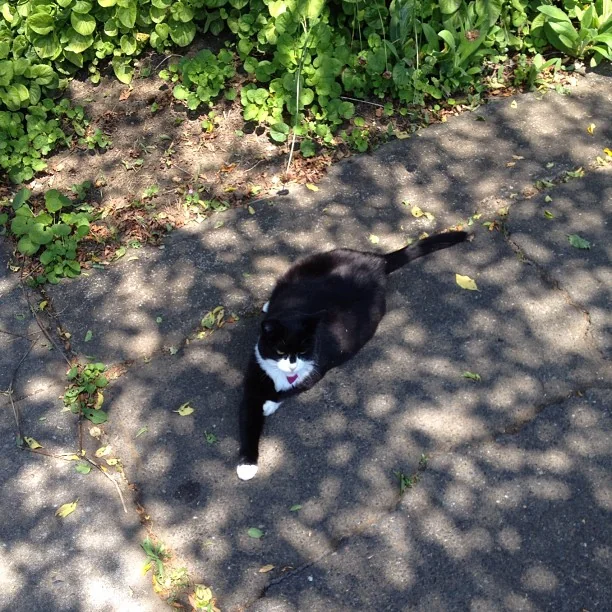
Cat training works best when the task is clear, the reward is worthwhile, and the cat can opt out. Start with an action that helps everyday life, such as looking toward you, approaching a mat, or investigating a carrier. Avoid beginning with a difficult handling task.
Define a tiny success
Write the behavior in observable terms: one paw on the mat, a look toward a target, or a step toward the open carrier. Reward that moment. Once it is easy, change only one part of the task.
Keep the environment forgiving
Use a quiet room, suitable footing, and a brief session. Account for food rewards in the daily allowance and avoid making normal meals conditional on success. Stop when the cat loses interest or appears tense.
Punishment does not show the cat which alternative you want. If a behavior is unsafe, manage access while teaching a safer option. New aggression or difficulty with a formerly comfortable action needs consideration of health and circumstances. Record progress by the last easy step rather than comparing your cat with online performances. Training is useful when it makes communication and daily care clearer, while preserving the cat’s comfort and freedom to participate.
Choose one behaviour you can describe clearly
A useful first training goal is something you can recognise without guessing. Walking onto a mat, touching a target, or entering an open carrier gives both of you a clear event to work with. A goal such as be good is too broad. Write down what the cat should actually do and where it will happen, then make the first version easier than the final outcome you imagine.
For example, a carrier goal can begin with looking toward a carrier placed in the room. Later steps may involve approaching, putting a paw inside, and settling briefly with the door open. You do not need to begin by closing the door or lifting the carrier. Defining the smaller steps prevents the session from becoming a repeated attempt at a task the cat is not yet prepared to complete.
Find a reward the cat wants in that moment
A reward has to matter to the learner, not just to the person offering it. Some cats work for small food rewards, while others may enjoy a short play opportunity. Test what the cat willingly accepts in the training location. A treat that is popular in the kitchen may be ignored near an unfamiliar object because the setting is too difficult.
Keep food rewards small and account for them within the cat’s feeding plan. Do not make the cat unusually hungry to create cooperation. If a veterinary diet or weight plan applies, ask the clinic which rewards fit. A session should not undermine an essential dietary restriction. If the cat declines a normally appealing reward, reassess comfort and timing rather than immediately selecting a stronger-smelling food.
Set up the space before inviting the cat
Choose a quiet area with stable footing and a clear route away. Put rewards within reach so you are not repeatedly standing up or rummaging through a noisy packet. Remove unrelated hazards, especially dangling cords or open containers the cat may investigate. If another animal competes for rewards, arrange separate access so the learner is not trying to train while protecting food.
Place equipment where the cat can inspect it voluntarily. A mat should not slide; a target should be easy to see; a carrier should not wobble when a paw enters. The practical setup can determine whether the task feels straightforward or confusing. Before assuming the cat is uninterested in learning, ask whether your chosen surface, reward position, or body posture makes the desired movement awkward.
Use a marker to make timing clearer
A brief consistent sound or word can mark the instant the cat performs the behaviour you want to reinforce. Introduce it calmly and follow it with the reward. A clicker is one option, but it should not startle the cat. Keep the marker short and consistent rather than switching between a long stream of praise words with unclear timing.
During practice, mark the useful action and deliver the reward where it supports the next repetition. For a mat exercise, place the reward on the mat rather than pulling the cat away from it. If your timing is late, simplify the exercise instead of speeding up the whole interaction. Clear repetition at an easy level is more useful than repeatedly marking an accidental movement after the main event has passed.
Build the behaviour in small increments
Reward the first achievable step, repeat it until it is comfortable, and then ask for a little more. Increase one difficulty at a time. Duration, distance, unfamiliar surroundings, equipment movement, and distractions are separate challenges. A cat that enters a stationary carrier confidently has not automatically learned to remain relaxed while the carrier moves through a busy doorway.
If progress stalls, return to the last step the cat completed easily. Perhaps the target moved too far, the mat changed position, or a visitor entered the room. Adjust the task rather than physically placing the cat into the final pose. Training works best when the cat’s actions produce understandable results. Moving the cat’s body for it can hide which part of the task it has actually learned.
Add a cue after the action becomes predictable
A cue is more useful when it identifies a behaviour the cat already understands. Once the cat reliably offers a simple action in your setup, introduce a brief consistent cue just before it occurs. Avoid repeating a word many times while the cat is doing something unrelated. That can make the sound less informative for both of you.
Keep household cues consistent. If one person says mat and another says bed for different actions on the same surface, write down the intended routine. Also decide what ends the exercise. A clear release or natural pause prevents a short stay on a mat from turning into an indefinite requirement. The cat should be able to understand when the task is finished and ordinary movement is available again.
Make sessions short enough to remain useful
End while the cat is still comfortable and participating. You do not have to use every reward you prepared. Signs that a break may help include repeatedly leaving, declining rewards, turning toward other activities, or becoming tense. These observations are more useful than insisting on a fixed number of repetitions because an online schedule says the lesson should last longer.
Keep a tiny record of what worked. Note the step, setting, and approximate ease, rather than scoring the cat’s intelligence. Tomorrow’s plan can then begin with a successful version. A cat may learn well in several brief sessions while finding one long session frustrating. Consistency means returning to clear, manageable practice, not extending every session until your own idea of sufficient effort has been met.
Generalise carefully to everyday situations
Practise in a second location only after the original version is comfortable. Lower your expectations when something changes. A cat that touches a target in a quiet room may need easier repetitions near the front door. Reward the familiar action generously in the new context, and avoid adding several distractions at once simply to see whether the training works.
For practical tasks, think through the full sequence. Carrier training may eventually include a closed door, gentle lifting, walking, and vehicle-related steps. Nail-care training may involve showing a tool, brief touch, and later handling under professional guidance. Each component deserves preparation. Success at the first action is a foundation, not proof that all later handling can be completed without further training.
Keep punishment out of the lesson
Do not shout, spray water, force a position, or trap the cat because it chooses another activity. Those reactions can make the setting harder to approach and do not tell the cat clearly what to do instead. If an unwanted behaviour is the concern, manage access to hazards and teach a suitable alternative. A stable scratching post and a useful placement, for example, matter alongside reinforcement.
Seek help when behaviour is new, intense, injurious, or potentially related to discomfort. A veterinarian can assess health concerns, and a qualified behaviour professional can help design a practical plan. Training is a way to improve communication and cooperation; it should not be used to explain away pain or replace needed care. The best first lesson leaves the cat willing to return for the next one.
Sources & further reading (3)
References and further reading. These do not replace advice from a veterinarian who knows your cat.
- Cats and play — Cats Protection
- Keeping cats indoors — RSPCA
- Cat training — Battersea