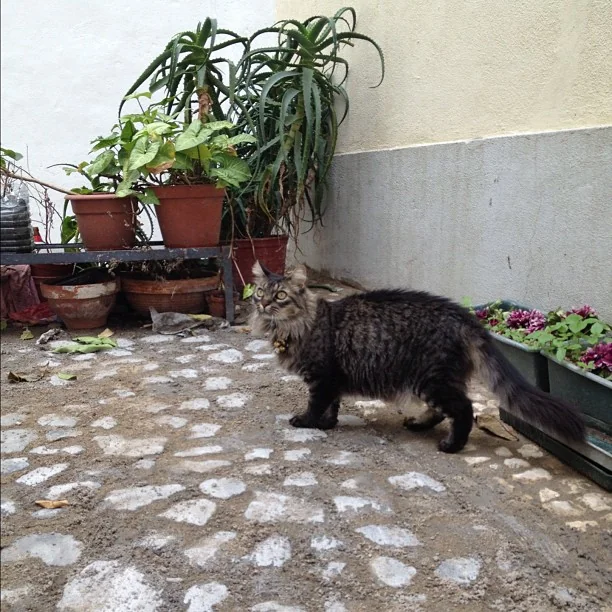
Hair ties move easily, feel interesting, and often appear in places a cat can investigate. That appeal does not make them safe toys. Small flexible objects can be swallowed, so prevention is more dependable than hoping the cat only bats them around.
Change storage first
Keep hair ties in a closed container or drawer. Check bedside tables, bathrooms, laundry, and bags where they accumulate. Ask everyone in the home to use the same storage rule, including visitors and children.
Offer a suitable alternative
Use a robust cat toy large enough for the individual and inspect it for damage. An interactive wand can provide movement while keeping the small lure under supervision; store strings afterward. Avoid replacing hair ties with another small household elastic.
If you suspect your cat swallowed one, contact your veterinarian promptly with the likely object and timing. Do not induce vomiting or wait for symptoms before asking what to do. If thread is visible from the mouth or body, do not pull it. Repeated attempts to eat non-food objects also deserve advice. The goal is not teaching the cat to dislike a tempting object. It is making the risky object unavailable while providing a game designed for feline play.
Understand the attraction without treating the object as a toy
A hair tie is small, easy to bat, and unpredictable when it slides or springs across a floor. Those features can make it interesting to a cat. The same features make it easy to lose under furniture or carry away unnoticed. Interest does not establish that an object is safe for play, even when the cat has used one many times without an obvious problem.
Look at the whole sequence. Does the cat merely watch a tie move, grab it in the mouth, chew the fabric, or walk away with it? Owners may see the amusing batting stage while missing what happens behind the sofa. Once a small elastic object becomes a possession the cat can hide and mouth, supervision becomes much harder. The practical response is to provide a safer activity and control access to the ties.
Make storage work during the busiest moments
Most access happens during ordinary transitions: getting ready for work, washing hair, changing clothes, or leaving a bag on a chair. Put a lidded container where those routines actually happen. A storage rule that requires carrying every tie to a distant cupboard is less reliable than a small closed box beside the mirror. Keep the lid secure enough that a curious paw cannot simply flip it aside.
Include worn, stretched, and broken ties in the plan. Do not leave them on a bedside table because they are destined for the bin later. Use a bin the cat cannot access, and empty it before loose items overflow. Ask other household members to follow the same routine, especially visitors who may be accustomed to leaving personal items on the floor overnight.
Search the places where missing ties accumulate
If your cat has been collecting ties, check under beds, low furniture, rugs, and favourite resting spots. Move furniture carefully and keep the cat away from unstable items during the search. Finding a hidden collection tells you where access has been happening, but it does not prove that every missing object has been recovered. Keep an accurate description of any tie you cannot account for.
Do not treat the search as a game in which recovered ties are rolled back toward the cat. Put them away immediately and clean the area. If a tie is chewed, damaged, or partly missing, contact the veterinary team for advice about the specific situation. A cat’s apparent comfort after playing does not allow an owner to rule out ingestion from the living-room floor.
Know what to do after suspected swallowing
If you see a cat swallow a hair tie, or have a credible reason to suspect it, contact a veterinarian promptly. Describe the object, approximate size, materials, any metal piece, the time, and whether anything else may have been swallowed. Keep an identical tie or a photograph available if that helps identify it. Follow the clinic’s instructions rather than waiting for the object to appear in the litter tray.
Do not try to make the cat vomit, offer an improvised remedy, or pull visible material from the mouth or anus. Those actions can cause harm. Tell the clinic about vomiting, reduced appetite, lethargy, abdominal discomfort, straining, or other changes, but do not wait for symptoms before calling after a witnessed ingestion. The appropriate plan depends on the object and the individual cat, not on another owner’s uneventful story.
Replace the movement pattern the cat enjoys
The useful question is which part of the game attracts your cat. A tie skittering over a hard floor may suggest a preference for small moving targets. Try a suitably sized cat toy designed for batting and carrying, with no easily detached pieces. Check its condition regularly and choose a size that is not readily swallowed by your particular cat.
If the springing movement is the attraction, create an interactive game using a proper supervised toy at a safe distance from your hands. Move the target along the floor, pause, and allow catches. Avoid replacing one small elastic object with another household item that presents the same problem. A rubber band, cord loop, or broken bracelet is not a safer substitute simply because it is less associated with hair care.
Keep supervised toys supervised from start to finish
Wands and toys with cords can offer useful interactive movement, but they also need appropriate storage. Put them away after play, especially if the cat chews strings or detachable parts. Before each session, check attachment points and fabric seams. A purpose-made toy can become unsuitable once damaged, and an appealing label does not remove the need for inspection.
Finish the session with a manageable catch and transition to an independent activity that is safe to leave available. That may be a sturdy kicker toy or a simple food puzzle compatible with the cat’s diet and abilities. The aim is to replace the routine of finding and carrying a tie, not merely distract the cat for a few seconds before returning the tie to the same exposed surface.
Avoid chasing the cat for the object
A chase can make carrying an item more exciting and may encourage the cat to retreat somewhere inaccessible. If the cat has a tie, remain calm and try to create a voluntary exchange using an appropriate reward or toy, while avoiding a struggle around the mouth. If you cannot retrieve it safely or think swallowing has occurred, seek veterinary guidance.
Practise exchanges with safe objects before a real incident. Reward dropping or moving away from a permitted toy, then return to an ordinary game. Do not rehearse by repeatedly handing over hair ties. The skill you want is a comfortable response to a familiar cue, not greater experience collecting dangerous items. Keep training brief and separate from urgent situations in which the object may already be disappearing.
Review whether chewing extends to other objects
Make a note if the cat repeatedly chews or attempts to eat nonfood materials, including fabric, plastic, or elastic. Record what is targeted, when it happens, and any associated changes in appetite, health, or household routine. Discuss a persistent pattern with your veterinarian. Do not assume that every case is simple boredom or that adding more toys will address all possible explanations.
Environmental opportunities still matter. Provide predictable play, appropriate scratching and resting places, and activities the cat can use comfortably. At the same time, remove access to the specific materials of concern. It is reasonable to improve enrichment while seeking assessment; it is not reasonable to leave hair ties accessible to test whether the new routine has cured the behaviour.
Make prevention easy for everyone who shares the home
Explain the reason for closed storage plainly: the ties are interesting but can be swallowed. Put a small reminder by the mirror if the household repeatedly forgets. Check laundry baskets, bags, and children’s craft areas as well as dressing tables. Elastic loops often enter the home in more than one form, and prevention works best when it follows the object’s real route through daily life.
Success does not mean the cat stops finding hair ties interesting. It means access is reliably controlled, suitable play is available, and everyone knows what to do if an item goes missing or is swallowed. That is a more practical goal than trying to teach a curious animal that a small, springy object should never attract attention.
Sources & further reading (4)
References and further reading. These do not replace advice from a veterinarian who knows your cat.
- Cats and play — Cats Protection
- Keeping cats indoors — RSPCA
- Bowel obstruction and intestinal blockage in cats — PDSA
- Ingestion of foreign bodies in cats — VCA Animal Hospitals