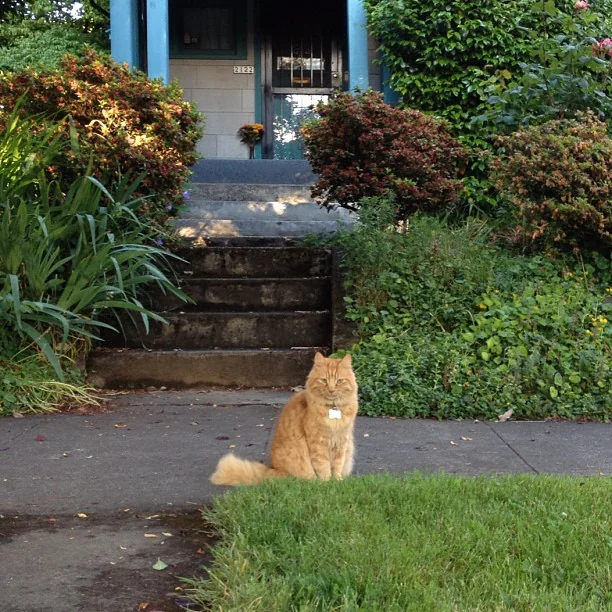
Teaching a cat to sit can be a pleasant way to practice clear communication. It can also give you a simple, voluntary behavior to reward before an ordinary activity, such as putting down a toy. The aim is not obedience at any cost. A useful session leaves the cat comfortable enough to choose to participate again.
Start with a cat that moves comfortably and is interested in the setting. If sitting appears awkward, the cat resists lowering the body, or movement has changed, speak with your veterinarian before making it a training exercise. Training should never be used to push through a possible physical problem. An attentive look or standing on a mat can be an alternative behavior while you seek advice.
Decide what “sit” will mean
For this exercise, sit means that the cat voluntarily lowers their hindquarters to the surface and remains there briefly. You do not need a perfectly symmetrical pose or a long hold. Define a small, observable result so you know exactly when to reward it. If you change the target during the session, the lesson becomes harder to understand.
Choose one cue word if you want to add a cue later. Ask everyone involved to use the same word and avoid repeating it rapidly when the cat has not yet learned the association. In the beginning, you can teach the movement before naming it. Saying “sit” several times does not by itself explain what action earns the reward.
Also decide how the session ends. A simple release word and moving back to ordinary activity can make the end clear. Do not reward a brief sit and then unexpectedly restrain the cat for another task. Keep the first lessons separate from grooming, medication, and anything else that might make participation less appealing.
Prepare a small, quiet training area
Use a familiar room with a stable, nonslip surface. The floor may be more comfortable than a table, and it removes the risk of an excited movement ending in a fall. Clear enough space for the cat to turn and walk away. Avoid training beside stairs, a hot cooking surface, or an open exterior door.
Have suitable rewards ready before you begin. Small food rewards should come from the normal daily allowance or an allowance discussed with your veterinary team. A food the cat is not permitted to eat is not appropriate simply because it is motivating. Some cats may prefer another predictable pleasant outcome, but food often makes timing easier for a beginner.
If another animal competes for rewards, arrange separate practice. You want to learn whether the cat understands the game, not how they behave while guarding food. Keep children at a comfortable distance and ask them to observe quietly. The environment should make a tiny success straightforward rather than presenting several challenges at once.
Capture a sit that happens naturally
One approach is to wait for the cat to sit during a relaxed interaction. The moment the hindquarters settle, use a consistent marker if you have introduced one, then give the reward. Place the reward so the cat can take it comfortably without needing to scramble or stretch.
Repeat only while the cat remains interested. Between attempts, allow the cat to stand or move naturally. You are identifying a behavior that already occurs, not placing the cat into position. If no sit happens, pause or finish the session. There is no need to keep waiting until either of you becomes frustrated.
This approach can be particularly useful for cats that dislike a hand moving over their head. It also encourages the owner to watch timing carefully. The reward should follow the action you want, rather than arrive after the cat has stood up, pawed at your hand, or moved into another position. Small timing improvements often make the game clearer than increasing the reward size.
If you use a lure, keep movement gentle
Some owners find it easier to guide attention with a small reward near the cat’s nose, then move it slightly so the cat naturally settles into a sit. Keep the movement modest. Do not raise the food so far that the cat jumps, twists, or strains to follow it. If the cat repeatedly backs away, the approach is not helping.
Never push down on the hindquarters or pull the body into position. A lured behavior is still voluntary. If the cat appears confused, try capturing a natural sit instead, or ask a qualified reward-based trainer for help with your timing and hand position.
Gradually reduce reliance on visible food in the guiding hand. Otherwise, the cat may learn only to follow a treat held in one particular way. Give the same small hand movement without food visible, mark the successful sit, and deliver the reward from your other hand or a prepared container. Keep the change easy and return to a simpler version if needed.
Add the cue when the pattern is predictable
Once the cat is comfortably offering the sit in the training context, say the cue once just before the action you can reasonably expect. Mark and reward the sit. You are linking a sound with an understandable action, rather than hoping the sound will produce a movement the cat has never practiced.
Keep your voice ordinary. A louder cue is not a more informative cue. If the cat does not sit, avoid repeated commands and do not physically finish the action. Pause, simplify the setup, and check whether your hand signal, location, or reward has changed. The cat may also simply be finished with training for now.
Practice in one comfortable setting before testing the cue elsewhere. A response beside the food cupboard may not appear immediately in the hallway. That does not mean the cat is refusing to cooperate. Location and distractions are part of the learning situation, and a new room can require an easier version of the exercise.
Build usefulness without demanding a long stay
A brief sit is enough for many household games. If you want a little more duration, reward a short pause before increasing it gradually. Do not increase duration, distance, and distractions together. Stay nearby while teaching a slightly longer pause, then work on your movement separately.
For example, once a comfortable sit is familiar, you could practice while you hold a favorite toy still. Reward the sit, give the release cue, and begin an appropriate game. Keep the sequence predictable. Avoid asking for a sit when the cat is already highly excited or when waiting prevents access to an essential need.
The cue must not become a requirement for every meal, drink, or exit. Training is an optional learning activity, not a way to make ordinary care conditional. Similarly, a trained sit does not make an open door safe. Manage hazards with barriers and secure routines rather than relying on a behavior that may fail when something surprising happens.
Troubleshoot the message you are sending
If the cat paws at the reward hand, check whether the hand is being held like a toy. Keep rewards ready and your movements small. If the cat repeatedly stands immediately, reward sooner while the sit is still happening. If they leave, let them. A shorter session next time may suit them better.
Keep a note of the last easy version: the surface, room, cue, and amount of help. This prevents the next session from starting with a harder task merely because you remember one successful attempt. Look for comfortable repetition rather than a single performance achieved through persistence.
End with a familiar, easy opportunity when the cat is still interested, then return to ordinary life. A useful outcome is a cat that understands one small exchange and an owner who can observe and reward precisely. That foundation matters more than a long sit, a fast result, or a video-ready performance. It can make later cooperative learning clearer while preserving the cat’s freedom to participate.
Sources & further reading (2)
References and further reading. These do not replace advice from a veterinarian who knows your cat.
- Train your cat to sit — Cats Protection
- Understanding your cat’s behaviour — RSPCA