Ears can turn toward sounds as well as change with a cat’s emotional state. One ear position cannot tell you everything the cat feels. Combine it with body tension, eyes, tail movement, the surroundings, and what happened just beforehand.
Observe without testing
Watch from a respectful distance while the cat rests or explores. Notice how the ears move when a household sound occurs. Do not make repeated startling noises or approach until the ears flatten to see what happens.
Use the information during handling
If the ears turn back while the body tightens or the cat turns toward your hand, pause and allow space. The practical response matters more than finding the perfect label. Compare the moment with the cat’s usual comfortable posture.
Persistent scratching at an ear, head shaking, discharge, or sensitivity needs veterinary advice. Do not interpret a held ear position as purely behavioral when discomfort may be involved, and do not insert cleaning tools into the ear. For children, use photographs to practice observing ears alongside the whole body. The lesson is to notice early changes and stop respectfully, rather than to keep approaching until the cat produces a warning everyone recognizes.
Watch the ears as part of a moving conversation
A photograph of a cat’s ears captures only one moment. In ordinary life, ears turn toward sounds, change with attention, and move alongside the rest of the body. A useful interpretation therefore starts with a short sequence: what was happening before the ears changed, what the cat did during it, and what happened afterward. Avoid treating one ear angle as a complete emotional label.
For example, a cat may rotate one ear toward a doorway while continuing to rest comfortably. That small movement may simply help track a sound. The same room could become uncomfortable if a vacuum starts, another cat approaches, and the body stiffens. The ear position matters, but its meaning becomes clearer when you include those surrounding details instead of matching it to a single diagram.
Learn the individual’s ordinary resting appearance
Observe your cat during quiet, comfortable moments. Notice the usual angle of the ears, how much they move, and whether one ear naturally sits differently. Coat length, anatomy, and previous injuries can affect appearance. A baseline helps you recognise a change without assuming every cat should look identical when relaxed.
Do not manipulate the ears to recreate a reference pose. Watch from a comfortable distance and let the cat choose its position. If you take a photograph for comparison, avoid flash and repeated attempts to make the cat face the camera. Your goal is to understand everyday movement, not produce a symmetrical image. Short observations during familiar routines are often more informative than a staged session.
Forward attention is not an invitation to intervene
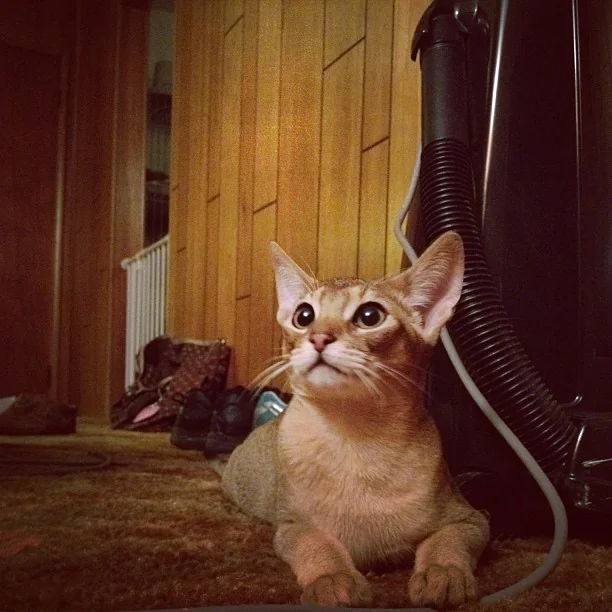
Ears directed toward a toy, bird, or unfamiliar sound can accompany focused attention. The cat may be interested, uncertain, or preparing to move. Check whether the body is loose, crouched, leaning forward, or held very still. Look at the tail and the cat’s ability to disengage as well. Alertness does not by itself tell you whether touch will be welcome.
If a cat is closely watching something through a window, avoid suddenly reaching for its shoulders or face. Announce your presence gently and give room to turn. A cat absorbed in a stimulus may react differently from the same cat resting on the sofa. Respecting that difference prevents owners from interpreting a startled response as an unpredictable change in personality.
Sideways ears need context and an easier option
Ears angled outward or sideways can accompany unease, intense attention, or a developing interaction the cat would prefer to manage differently. Look for additional changes such as a tense body, a low posture, tail movement, avoidance, or a turned head. The practical response is usually to reduce pressure and observe rather than moving closer to obtain a clearer view.
During grooming, that might mean pausing the brush and allowing the cat to stand up. During a visitor greeting, it may mean asking the visitor to stop reaching. You do not need certainty about an emotional word before giving the cat more space. An earlier, smaller adjustment can prevent the interaction from progressing toward a hiss, a swat, or a rushed escape.
Flattened ears are a reason to stop adding pressure
When the ears are held tightly back or low alongside a tense posture, take the situation seriously. Do not lean over the cat, corner it for a photograph, or try to smooth the ears forward with your hands. Increase distance where possible and preserve a route away. Keep children and other animals from moving into the cat’s immediate space.
Consider what can be changed without handling the cat. Turn down a noise, pause the activity, open an unobstructed route to a safe room, or move the other animal away. If essential medical handling is involved, seek veterinary guidance on a safer plan rather than escalating restraint on your own. The aim is to reduce the difficulty the cat is communicating, not suppress the visible signal.
Notice when each ear is doing a different job
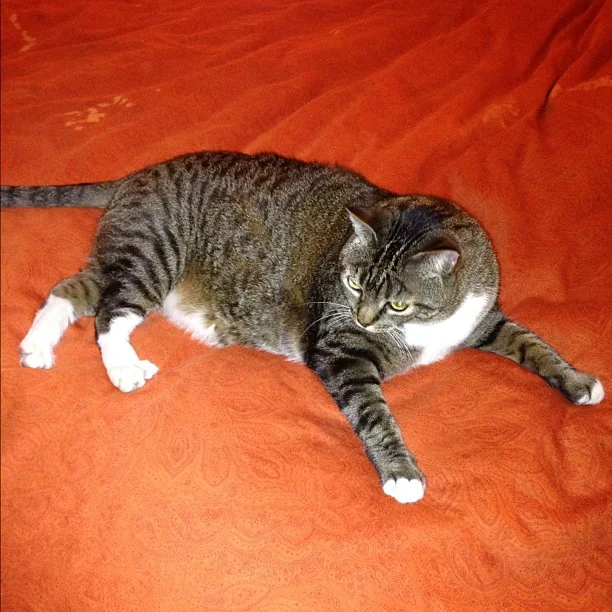
Cats can orient ears separately, so an asymmetrical position is not automatically concerning. One ear may follow a familiar person’s movement while the other tracks a sound elsewhere. Watch whether the ears return to their usual positions and whether the cat otherwise continues ordinary activity. A flexible response to the environment differs from a persistent new abnormal carriage.
If one ear remains unusually positioned, the cat shakes its head repeatedly, scratches, or reacts as though uncomfortable, arrange veterinary advice. Do not insert tools, cotton buds, or an unprescribed cleaner to investigate. A visual impression cannot identify what is happening deeper in the ear. Note when the change began and whether it affects balance or normal behaviour so the clinic can advise on urgency.
Use ear changes to improve play sessions
During interactive play, watch how ear position changes with the pace and distance of the toy. A cat may enjoy following a moving target until the toy repeatedly flies into its face or the game becomes too intense. Pause before the cat becomes overwhelmed. Let the toy move like something the cat can track and catch rather than using the cat’s body as the target.
Finish with a manageable catch and a calm transition instead of abruptly pulling the toy away after prolonged excitement. Keep fingers and feet out of the game. Ear movement alone does not define the best session length, but it can help you notice a broader shift in attention and posture. The useful lesson is to adjust the interaction while the cat can still respond comfortably.
Teach other people to look before reaching
A simple household rule is to observe the whole cat and pause if the response becomes uncertain. Show children how a cat can turn its head, shift its ears, and move away before making a louder objection. Explain that respecting those signals is part of friendly contact. Avoid asking children to memorise a rigid chart and then test each pose on the cat.
Visitors may need a clear practical instruction, such as sitting sideways and allowing the cat to approach. That can be more helpful than naming several ear positions in quick succession. Give the cat access to an undisturbed resting place, and do not send guests after it. The environment should support the communication you want people to recognise; leaving should remain an effective option.
Keep a useful record when something is persistently different
If a recurring ear or body-language change concerns you, record the setting, activity, duration, and any associated health changes. A brief video taken without provoking the behaviour can be helpful for the veterinary team or qualified behaviour professional. Avoid recreating a frightening trigger simply to obtain evidence. A description of naturally occurring events is preferable to a deliberately uncomfortable demonstration.
Ear positions are most useful when they help you make kinder, more accurate decisions in real time. Give space when the cat needs it, adjust activities that cause tension, and seek help for persistent changes or signs of discomfort. You do not need to read every movement perfectly. You need to keep observing, remain willing to pause, and let the rest of the cat complete the picture.
Sources & further reading (3)
References and further reading. These do not replace advice from a veterinarian who knows your cat.
- Understanding your cat’s behaviour — RSPCA
- Cat behaviour guide — Cats Protection
- Cat body language — PDSA