
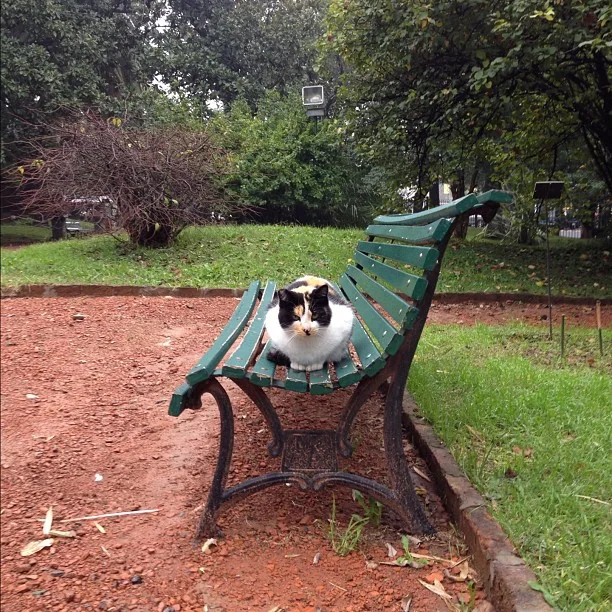
Trust is easier to recognize through repeated choices than one dramatic gesture. A cat may choose to rest nearby, approach for a familiar interaction, or move through the room with relaxed posture. None of these signs guarantees that the cat wants to be picked up or touched everywhere.
Try the pause test
During a welcomed cheek or head stroke, pause. If the cat moves toward your hand, another brief stroke may be welcome. If they turn away or remain still, give space. This is a practical check of the current interaction, not a scientific trust score.
Protect what is working
Keep resting places free from unwanted attention. Let guests wait for an approach, and avoid reaching into hiding spaces. Offer predictable food, play, and ordinary care without making every approach lead to handling.
A cat showing their belly may simply be comfortable in that position; it is not automatic permission for a belly rub. Equally, a cat that dislikes lap time can still enjoy your company. Judge progress against that individual’s previous behavior. Sudden withdrawal or a new dislike of touch deserves attention to health and circumstances rather than an assumption that trust has disappeared.
Look for a pattern of comfortable choices
Trust is more useful to observe as a pattern than to score from a single gesture. A cat may choose to rest in your room, approach for a brief greeting, and then sleep somewhere else. Another may stay close but prefer not to be touched. Both can be comfortable arrangements. The important question is whether the cat has options and repeatedly chooses ordinary activity near you without appearing tense.
Keep comparisons within the individual cat’s life. A confident lap cat is not a standard every cat must reach. Age, previous experiences, sensory differences, household activity, and current health can affect how closeness looks. Notice small changes over several quiet days instead of checking whether your cat matches a dramatic social-media example. Voluntary proximity is meaningful even when it does not produce a photograph of a cuddle.
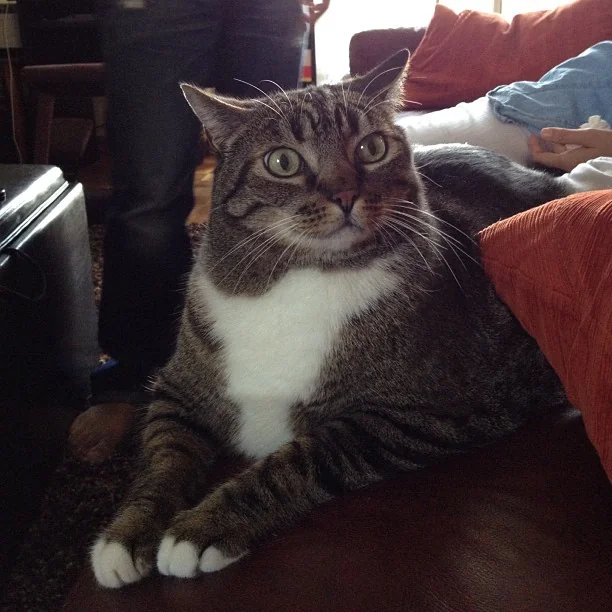
Notice what happens when you enter the room
Watch the cat’s whole response rather than interpreting the first movement. A resting cat may briefly raise its head, look toward you, and return to sleeping. That ordinary continuation can be encouraging. A cat that gets up and approaches may want contact, food, access to another room, or several things together. Greeting is information about the moment, not a complete translation of the cat’s feelings.
Try to make your arrival predictable. Enter at a normal pace, avoid looming over the bed, and let the cat decide whether to approach. If every entrance leads to being picked up, a cat may start leaving even when it previously enjoyed sharing the room. Respecting a quiet greeting gives you a clearer view of what the cat chooses when interaction is genuinely optional.
Treat resting nearby as an activity in its own right
Owners sometimes overlook a cat sleeping at the opposite end of the sofa because they expected a lap visit. Sharing a room can still be an important form of companionship. Leave a stable resting surface near the place you spend time, with an easy route away. The cat should not need to balance on a narrow armrest simply to be nearby.
Avoid turning every settled moment into an opportunity for handling. If the cat repeatedly wakes to being stroked, moved, or photographed, resting near you may become less restful. Sometimes the best response is to keep reading your book and let the cat sleep. That preserves the value of the location and makes closeness part of daily life rather than a demand for continuous social performance.
Read a relaxed body in context
Soft posture, ordinary breathing, and the ability to shift positions comfortably can help you judge an interaction. Look at ears, eyes, tail movement, muscle tension, and what the cat does next. No single feature guarantees comfort. A still cat may be resting, but stillness during restraint can also mean the cat has limited choices. Distinguish relaxed participation from simply being unable to leave.
For example, compare a cat stretched out beside you with a cat held tightly on your lap. Even if neither struggles, the situations provide different evidence. In the first, the cat can stand and walk away. In the second, apparent cooperation may be difficult to interpret. Give room to move and watch the choice that follows instead of treating a lack of protest as permission for more handling.
Understand the invitation to touch narrowly
When a cat rubs against your hand, offer a brief stroke in an area the cat normally enjoys and pause. If the cat leans back into contact or approaches again, you can respond gently. If the cat turns away, changes posture, or starts leaving, stop. Pausing lets the interaction develop from the cat’s current preference instead of continuing until a warning becomes unmistakable.
A familiar cat may still decline touch while sleepy, busy watching something, or uncomfortable. That is not a personal rejection or proof that previous trust has vanished. Keep the relationship broader than petting. You can provide food, play, access to a favourite place, and a calm presence without requiring the cat to accept physical contact every time you want to offer affection.

A visible belly is not a handling instruction
A cat may roll or stretch while resting and expose the abdomen. Owners often interpret that posture as an invitation to touch the belly, but the next action should still depend on the individual cat. If the cat does not ordinarily welcome abdominal touch, leave the area alone. There is no need to test the relationship by reaching toward a sensitive part of the body.
Choose a less intrusive response, such as a quiet greeting or a brief familiar cheek stroke if the cat approaches. If paws grab your hand, stop increasing the interaction and give space rather than arguing with the cat about the meaning of the pose. Trust grows more usefully through predictable responses than through repeated experiments to see what the cat will tolerate.
Make care routines easier to predict
Daily care can strengthen a relationship when it is understandable and manageable. Set out a brush before beginning, keep grooming brief, and stop before the cat becomes overwhelmed. For a cat that dislikes handling, the first useful step may be approaching the brush voluntarily rather than enduring a full grooming session. Small, comfortable repetitions give you information about readiness.
The same principle applies to carriers, medication routines, and veterinary preparation, although medical instructions must still be followed with professional support. Ask the clinic for help if necessary care repeatedly requires a struggle. Do not label the cat untrusting because a procedure is difficult. Adjust the practical method and training plan so the relationship does not have to carry the entire burden of an uncomfortable task.
Protect choice in a household with several people
Trust with one person does not automatically transfer to every visitor or child. Explain how to greet the cat, where the cat can rest undisturbed, and what signs mean an interaction should end. Provide escape routes that do not require passing through a group of people. A high resting place is useful only if the cat can reach it safely and remain there without being followed.
Avoid making sociability a test for guests. Asking someone to hold a reluctant cat so it learns they are friendly can make that person’s presence harder to predict. Invite the person to sit quietly and let the cat approach if it chooses. Progress may look like remaining in the room rather than hiding, which is valuable even when nobody gets to stroke the cat.
Respond thoughtfully when a familiar pattern changes
If a cat suddenly stops approaching, avoids touch, hides more, or changes its resting habits, consider practical and health explanations. Has the room become noisy? Is another animal blocking the route? Is the cat moving differently or eating less? A new avoidance pattern should prompt observation and appropriate veterinary advice, especially when discomfort or other changes are present.
Do not try to repair an unexplained change with more intense contact. Give reliable access to essential resources, keep interactions calm, and record what has changed. The aim is a relationship in which the cat can communicate preferences and receive a predictable response. A quiet, comfortable household tells you more about trust than any checklist that demands a particular cuddle, pose, or display of affection.
Sources & further reading (2)
References and further reading. These do not replace advice from a veterinarian who knows your cat.
- Understanding your cat’s behaviour — RSPCA
- Cat behaviour guide — Cats Protection